VEN is not for profit. Every dollar goes towards our work in supporting local ecosystems and communities.

A Forest in Bloom: Da Nang's Flower Season on Sơn Trà
Thàn Mát: The Flower of the Doucs
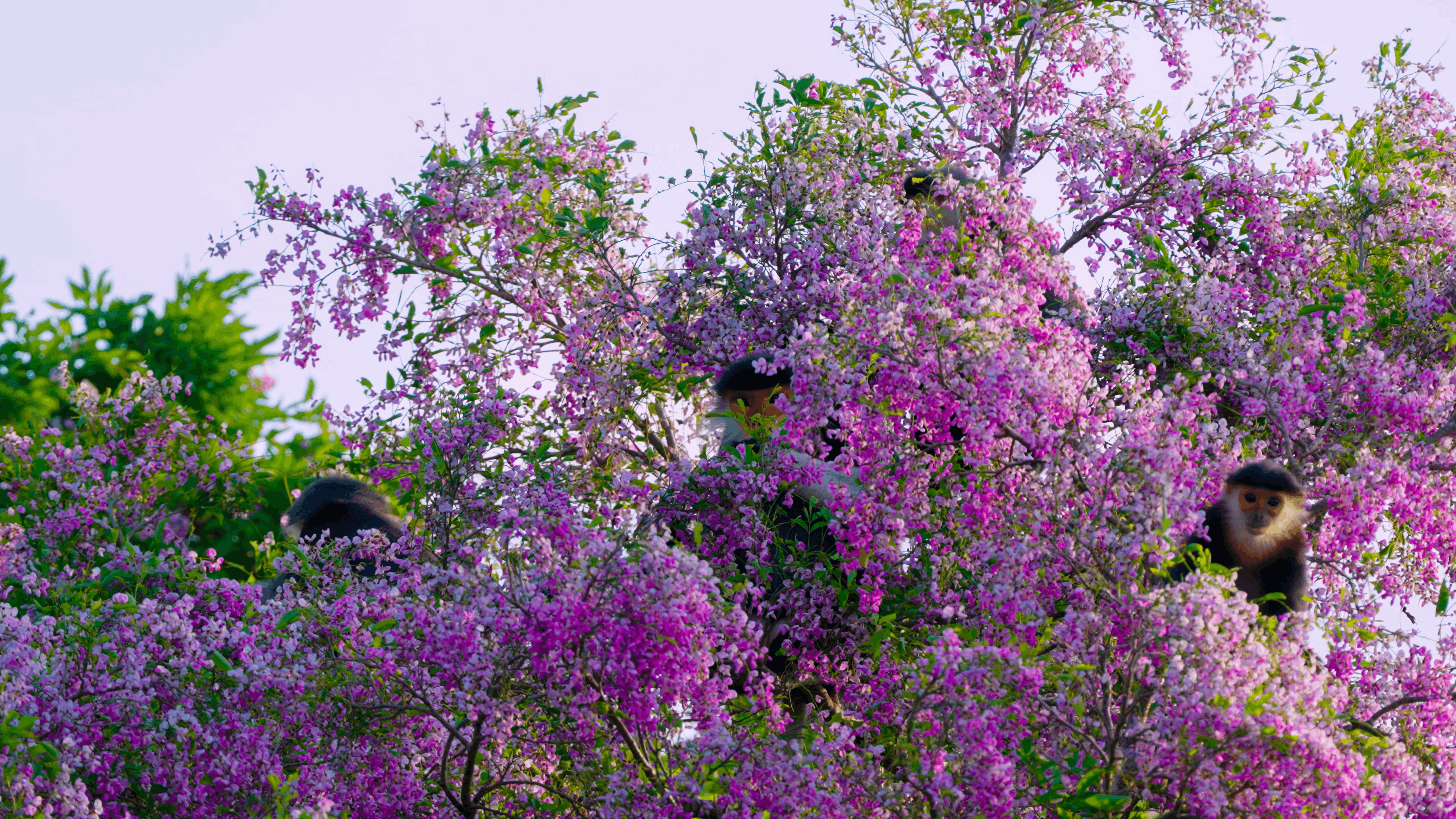
By late April, Sơn Trà fills with the soft pink and violet clusters of thàn mát (Millettia ichthyochtona), a tree native to the peninsula. Its flowers hang in long clusters, sometimes reaching up to 15 centimeters, and their color shifts in the sunlight from pale pink to deep purple. The peak bloom lasts only three to four weeks, which is part of what makes it so striking — and so fleeting.
Thàn mát is more than a beautiful tree. Its flowers are one of the favorite foods of the red-shanked douc langur (Pygathrix nemaeus), known as the "queen of primates." Sơn Trà is home to the world's largest wild population of these endangered langurs, with an estimated 300 to 400 individuals. During flowering season, troops of doucs descend from the upper canopy to feed on the blossoms, and for a brief window, two of Vietnam's most extraordinary species — a tree and a primate — depend directly on each other.
This is what makes the thàn mát flower a symbol of Sơn Trà. Lose the tree, and you weaken one of the food sources that keeps the douc population stable.
Yellow Flamboyants: A Canopy of Light
.
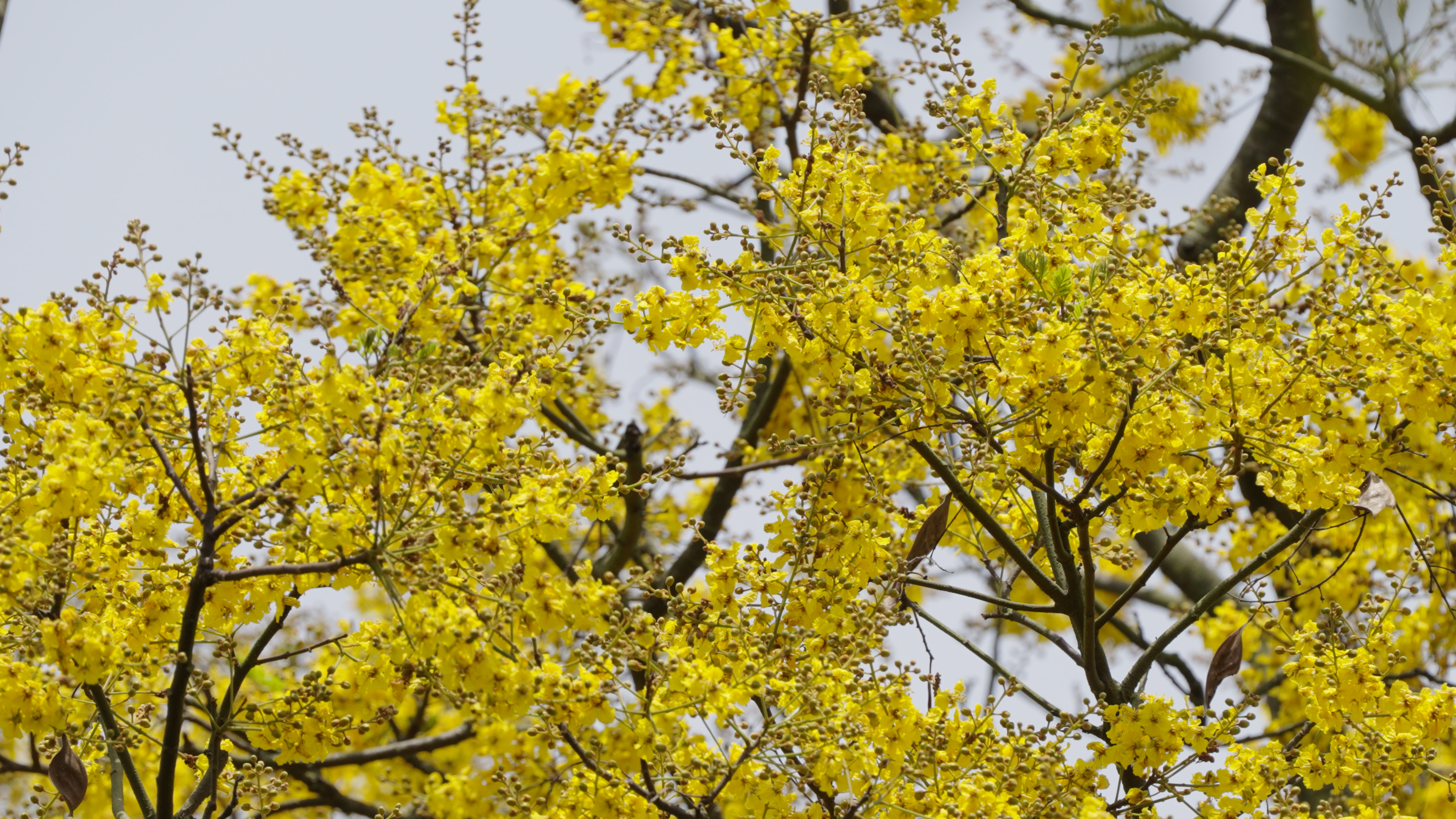
The yellow flamboyant (lim xẹt) is one of the earliest signals of the flower season, beginning to bloom in late March. Its bright yellow petals burst open against the pale sky and the deep green of the surrounding forest, catching the sunlight and drawing the eye from kilometers away. These are tall, woody trees, and when they flower, entire stretches of Sơn Trà appear lit from within.
Yellow flamboyants mark the peak of the dry season. They tell other species — pollinators, primates, photographers — that the forest is waking into its most active months. Bees and butterflies arrive first, drawn to the nectar, and with them comes the slow chain of pollination that keeps the whole system alive.