
Masters of Deception:
How Mimicry Helps Animals Survive

In nature, survival is not only about strength or speed sometimes, it is about deception. Mimicry is an evolutionary strategy where one species evolves to closely resemble another organism or object. This adaptation helps animals avoid predators, deceive prey, or improve their chances of reproduction. Mimicry can involve color, body shape, posture, movement, and behavior.

.
There are three main types of mimicry.
Batesian mimicry occurs when a harmless species imitates a dangerous one for protection.
A classic example is a non-venomous snake that resembles a venomous one. To a predator, the risk is too high, so it stays away.
Müllerian mimicry happens when multiple harmful species evolve to look alike, strengthening a shared warning signal.
Brightly colored poison frogs, stinging insects like wasps and bees, and toxic butterflies are common examples.

Aggressive mimicry is used by predators or parasites that imitate harmless species to approach their prey undetected.
Some predatory insects resemble flowers to attract pollinators, while certain fish imitate cleaner fish to get close to other fish before attacking. In this case, mimicry becomes a tool for hunting rather than hiding.

A Fascinating example is the tiny mantis Odontomantis planiceps, which closely resembles ants in color, shape, and movement. Since many predators avoid ants due to their aggressiveness and chemical defenses, this disguise protects the mantis from being eaten.
Camouflag: Survival Through Disguise

Camouflage is one of the most important survival strategies in the insect world. Because most insects are small, soft-bodied, and defenseless, avoiding detection is often far more effective than fighting or fleeing. Over millions of years, natural selection favored individuals that were harder for predators to see, allowing these traits to become more common over time.
Insects use two main types of camouflage: crypsis and masquerade.

Crypsis means blending into the background by matching the colors, patterns, and textures of the environment, such as leaves, bark, or soil.
Masquerade, by contrast, occurs when an insect looks like a specific object, such as a leaf, twig, or stone, causing predators to overlook it as prey.
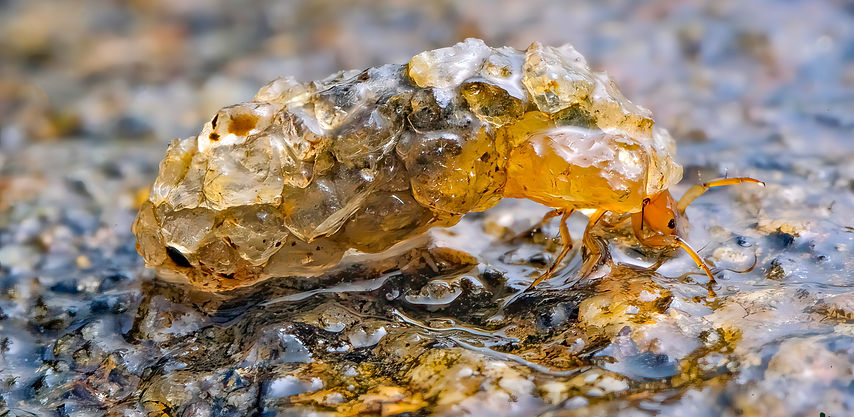
Since many predators rely on vision to hunt, even a simple resemblance to something harmless can prevent an attack. This shows that evolution does not aim for perfection, but for what works well enough to survive. Through these strategies, camouflage has become one of the most powerful tools insects use to persist in a world full of predators.